

I. Observing
On a trip to the world’s busiest museum last fall, my husband was nearly trampled by a determined fellow museum-goer, a middle-aged Parisienne who shuffled from canvas to canvas at an unvarying two-meter distance, capturing paintings in rhythmic succession with her smartphone. Uncharitable judgments crowded into my thoughts about this person: about her sharp elbows and her scissoring lurch; about her greedy, even unseemly, quest to reduce the Louvre’s collection of Renaissance paintings to a private trove, whether for personal reflection or for reposting on social media, I’ll never know.

That I was at that very moment using a pre-war Leica to make “discreet,” “artistic” photos in the same gallery, or that I’m just now sharing similar images, albeit ones taken at different museums, here on this online platform, are ironies to which, even then, I was not totally insensitive. Whatever our differences in temperament or taste, the Louvre Snapper and I share a photographic inclination that raises some deeper questions: Why do we take pictures in museums? And when we do so, how do we know if we’ve gotten what we want from them?

Having only fairly recently been deemed museum-worthy in its own right, photography has for a much longer stretch of its history played a subsidiary role in diffusing images of high culture around the globe. For all of the blue-chip art printed in catalogues or stenciled onto tote bags, few of us would consider such museum photos, however accomplished, as having much artistic merit. Indeed, the better they are at capturing the likeness of the pieces they depict, the less apt such pictures are to be seen as having any identity apart from them.

To qualify as authorial—an image created by a human being with some intention beyond facsimile—museum photographs need either to be altered in some interesting way or to make a commentary on the works and the environment that envelops them. The best such images in my view succeed by quietly noting incongruities or parallels between the artworks and the humans who encounter them.

II. Decoding
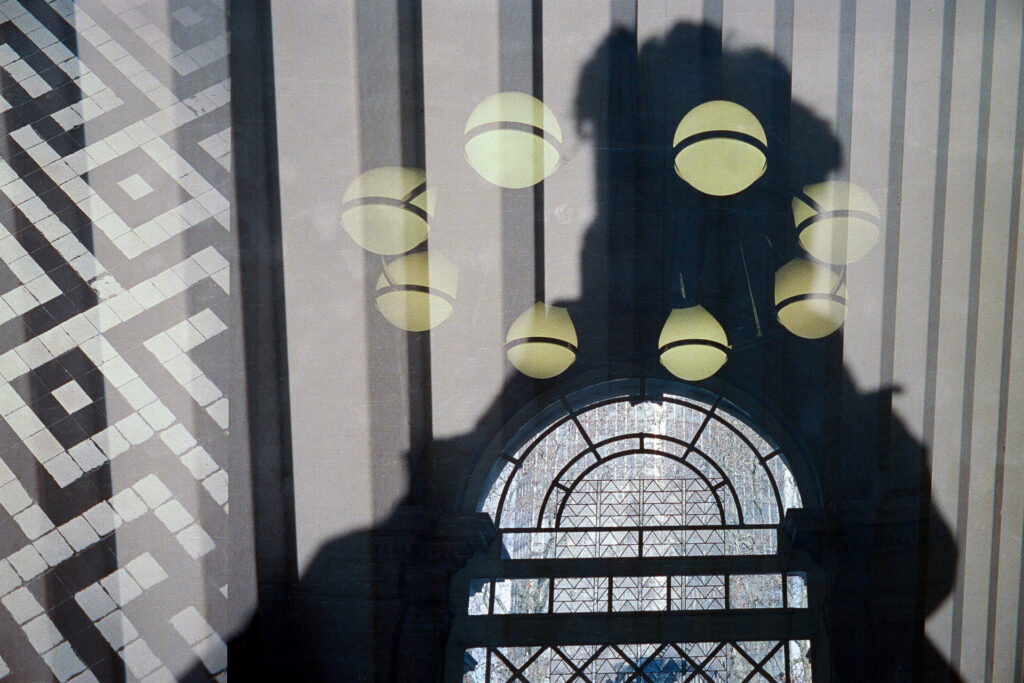
Although artistic observation and social commentary figure in some of my personal museum photos, they aren’t always driving factors. Another option is revealed in the following image, taken recently on a visit to New York’s Museum of Modern Art.

In the moment of composing this photo, I was more concerned with technical matters—how to get an adequate exposure; how to keep the frame free of people in the museum’s crowded gallery on a Sunday afternoon—than with the strange works suspended in my rangefinder. While those works most definitely made an impression, a vague disquiet that caused me to reach for my camera, those sensations only resolved into coherent thoughts later, after I developed and studied the scans of my photos at home.
More than any other factor, my unease with Mike Kelley’s multi-hued sculptures comes from the material they are composed from: stuffed animals, countless hundreds of them, their weirdness increased by the artist’s choice to tuck most of their faces and other recognizable markers out of sight into the interior of his forms. Nostalgia and guilt—for my daughter’s “stuffie”-filled childhood, certainly, but also for the degraded planet we have bequeathed her and taught her to accept as normal amidst so much twee junk—mingled in my thoughts. While these impressions were likely building as I stood with my camera at the museum, the reticence imposed by such public places kept them temporarily at bay. Feeling them later while looking at my photo, I was able to more fully grasp the reproach in Kelley’s blobby forms, and also their unsettling beauty.

III. Responding
If my personal photos have the side effect of helping me sort through the confusion that can accompany a trip to a museum, other times I take them with a more explicit authorial intention. Such is the case with a trio of photos prompted by the recent “Monet and Venice” exhibit at the Brooklyn Museum. Like many folks of my age, I associate Monet with the mid-1980s; his paintings at the Marmatton Museum in Paris were a defining aesthetic experience for me when I saw them during a year abroad there in 1986, a first true artistic “crush.” (I wasn’t present in the U.S. to see the blockbuster show at Washington’s National Gallery that launched the modern American Impressionist craze that same year).

In contrast to the torrent of Monet-themed merch churned out continuously by all and sundry over the past four decades, I made these photos with a classic black and white film, Ilford HP 5 Plus, and printed them on fiber-based paper in the darkroom. This limiting choice was deliberate. I had already gone once to see “Monet and Venice,” and been surprised by it; these photos, taken on a return visit the last day of the show’s run, came from a desire to grapple a bit with the exhibition’s unexpected, somewhat melancholy impact.
The Brooklyn show’s climax came in a circular-shaped gallery at the back of the exhibition, a room sheathed in deep blue wall-covering on which were mounted a dozen or so views of the Venice lagoon and various buildings alongside it. In their gilt frames and with their classic subject matter, these spotlighted canvases seemed on a first look to have little to do with the shimmering near-abstraction of the waterlily paintings I had found so moving in my twenties. In the calmness of that blue room, however, with the illuminated works set like bright windows in the dark wall, the relationship between them and the paintings that so transfixed me in my youth became clear.

It is the light, of course—Monet’s light—that unites them.
More than any other artist I can think of, he is a virtuoso at representing the tonal shifts of even a slight variation in illumination (a different moment of the day; a shifting layer of cloud) and its vast impact on the scenes before him. This is true whether his subject matter is the oft-repeated images of aquatic flowers, of a cathedral façade or, as in this case, in views of a maritime capital, bathed in the opaline glow of the Adriatic.

Even with the most sophisticated digital equipment, attempting to capture the cumulative impact of these paintings, seen together only rarely since they left Monet’s studio, would be a huge undertaking. Rather than seeking anything so ambitious, my modest set of prints, made with a mid-century Leica M3 (I metered for the paintings’ highlights, allowing the gallery and its crowds to drop into shadow) are my effort to suggest something of the works’ emotional resonance. The first frame (above) shows a complete painting, almost a reference photo, taken from a close distance. The second shows the same painting from further back in the gallery, with the silhouettes of two patrons close against it. The third, even further back and from a slightly different angle, shows a trio of paintings on the gallery walls, their outlines deformed by the bodies of other patrons or sliced by the edge of the frame. Rendered on a tiny negative, their details are on the point of dissolving, yet in the enveloping darkrness—like a memory—their radiance persists.

Thanks for reading.
Postscript
According to the curators of the Brooklyn Museum exhibit, Monet’s views of Venice were begun during a three month sojourn there with his wife Alice in 1908. Reluctant to depart from his home in Giverny, where he was deep in his studies of waterlilies, a theme that became a late-career obsession, he relented under pressure from Alice, who found her husband’s preoccupation with those aquatic plants alarming. Returning from Italy, the artist completed the Venice paintings with renewed vigor. Agreeing with Alice that the Italian interlude had done him good, Monet nonetheless was unable to fulfill a desire to return there for a later visit owing to her death in 1911. In the wake of that loss and with the advent of World War I, he applied himself all the more firmly to the waterlilies, in the process making the unprecedentedly massive panels (close to a hundred meters total) that he donated to the French nation with the return of peace. They can be seen today in a specially-designed oval gallery at the Museum of the Orangerie in Paris, the “Sistine Chapel of Impressionism.” Claude Monet died at age 86 in 1926.

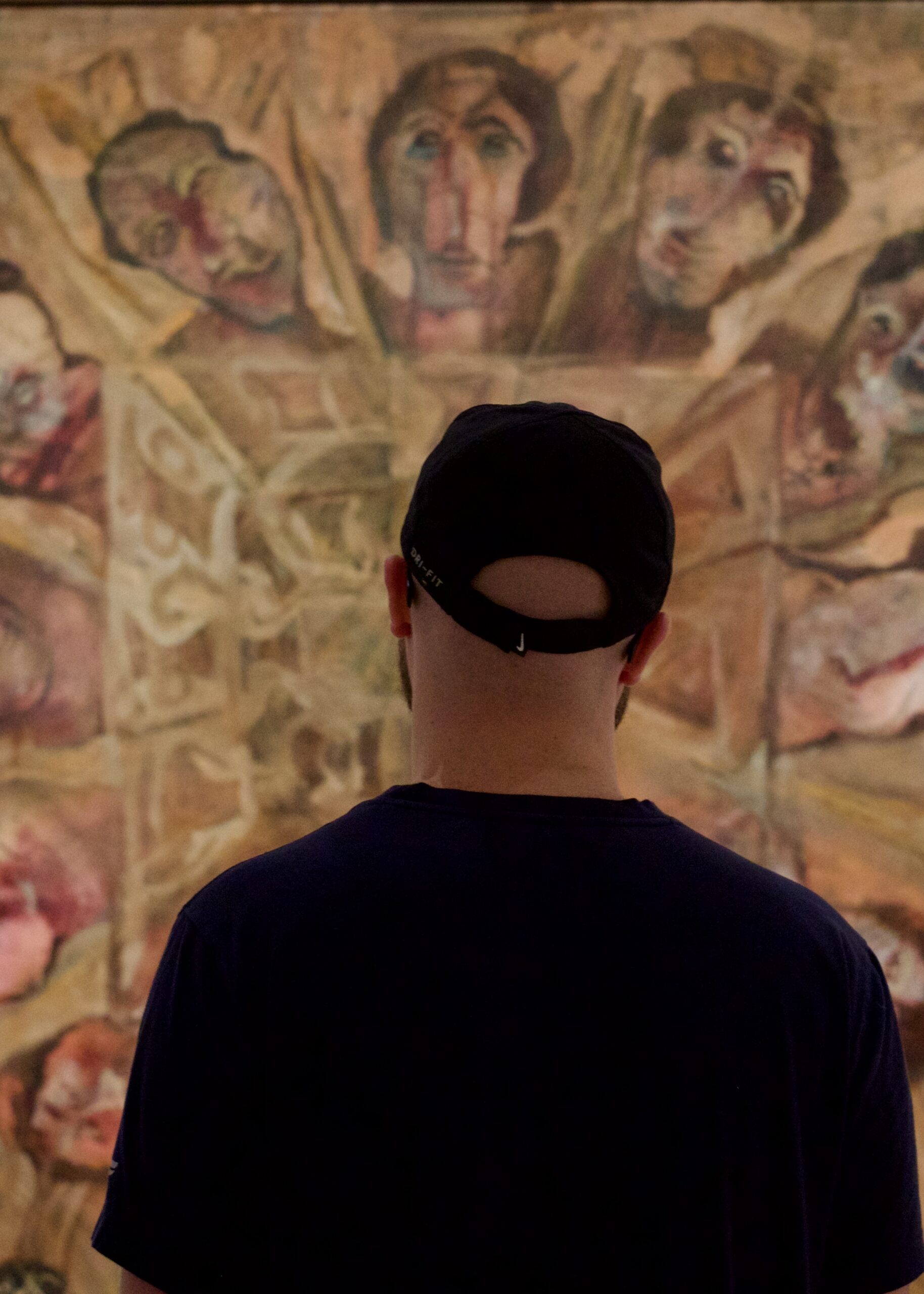
FEATURED IMAGE: MOMA Mandala, 2023. Leica M10-R, Summilux 50 ASPH f1.4
You can see more of my work at leica1933.com.
Share this post:

Comments
No comments found