High Risk, High Reward (or, Against Spray and Pray)

By Andrea Monti

I have recently stumbled upon a video of a guy ‘debunking’ the alleged myth of ‘one shot, one keeper’ —actually the orginal Japanese version was hikken, hissatsu, one shot one kill— in photography. In short, his reasoning was: 1) I have seen the contact sheets of many famous photographers, 2) all of them actually took many photos and then picked-up the best one, 3) taking bursts is not spray and pray as soon as you are attentive to what is going to happen and don’t casually shoot whatever moves.

Although he might have a point by differentiating casual and deliberate burst shooting, I am not entirely convinced of the validity of his argument.

Over the years, I have taken photos at local, national and international sporting events — a sector where there is no opportunity for a second chance to capture a moment — and I have never resorted to burst mode.

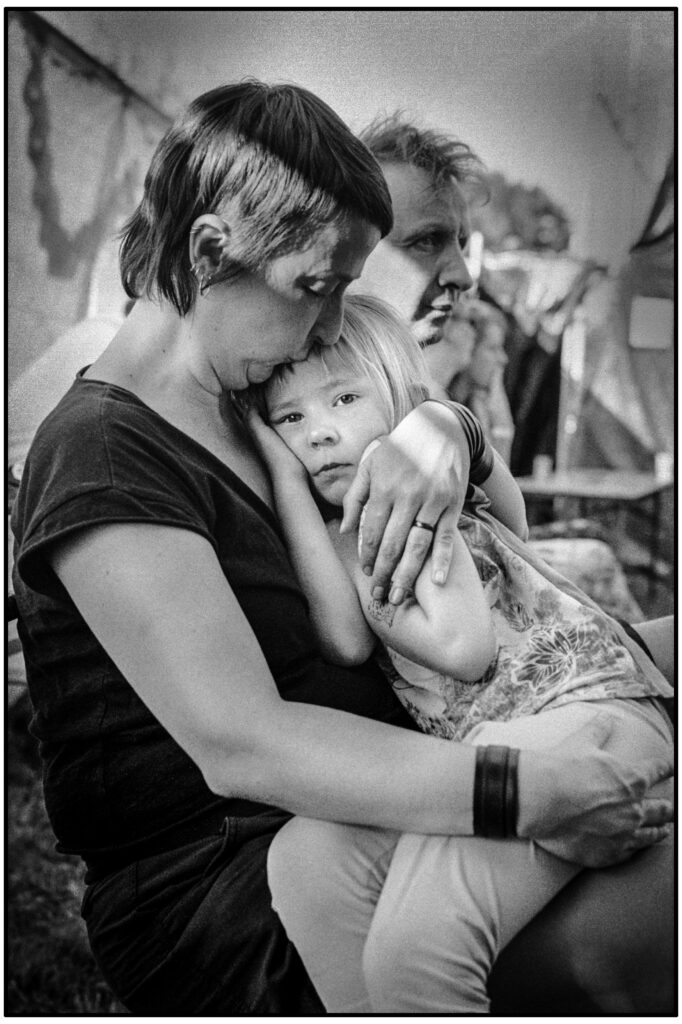
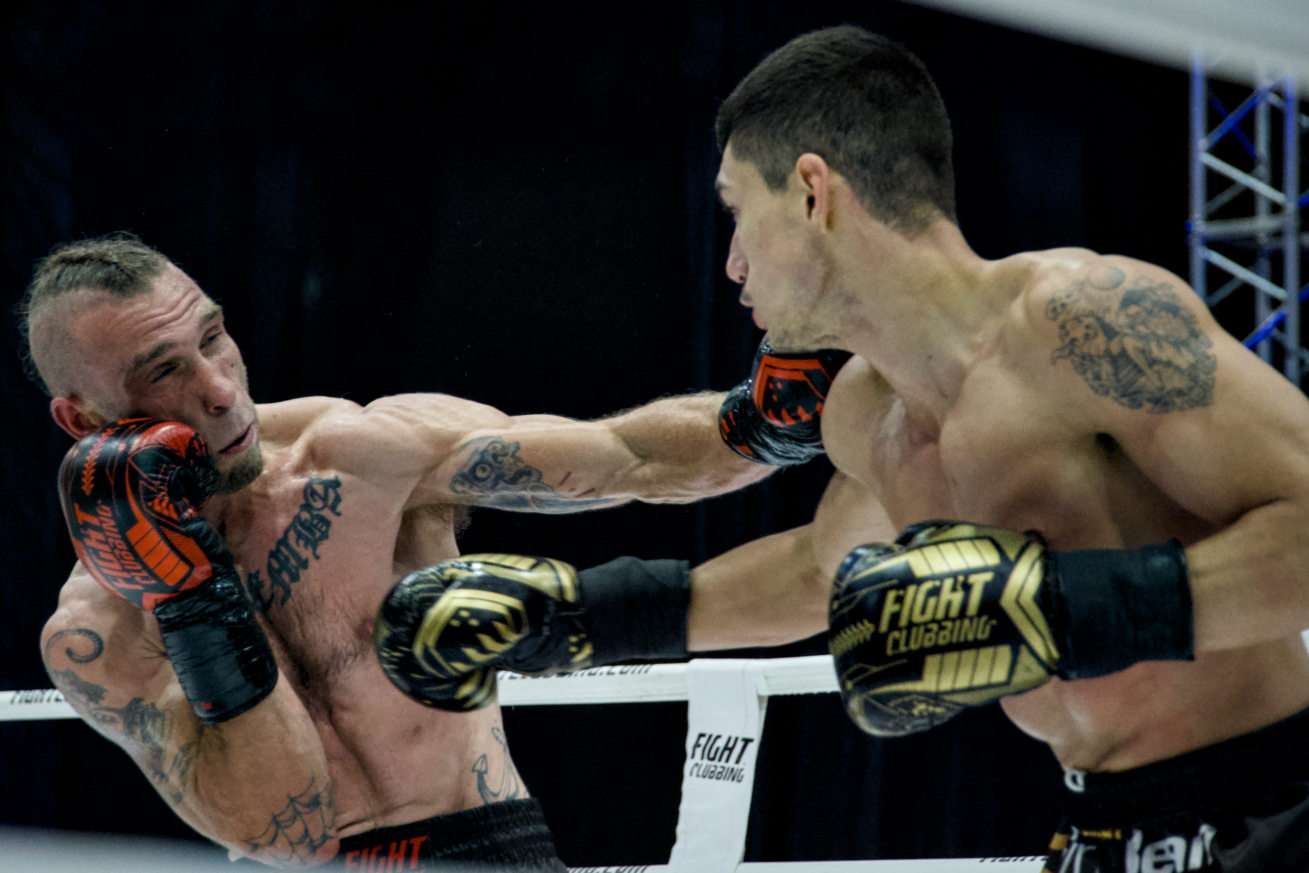
Believe it or not, the photo featuring this post and this next one are single shots (like the hook thrown by the pugilist)

same as this photo of a beach wrestling bout.

Another example is this photo, which was taken during an Italian national team handball match.

or this one, taken during a leg of the International Volley Verteran Association’s tournament

or —finally— this one, taken in a World Skate event

I didn’t need to spray and pray — or whatever you want to call this way of shooting — because I knew exactly what was going to happen. This comes easily to me in sports that I have practised myself. But when it comes to disciplines I don’t know, I fill the gap by studying the rules of the game in advance and watching hours of videos to understand how events will likely unfold.

This knowledge base is built incrementally. The rules stay as they are for longtime and body mechanics don’t change throughout different sports, so once you become adept at recognising the precursors of a jump, run or turn, you are automatically ready for what comes next.

Of course, it’s undeniable that burst-shooting increases the likelihood of getting good photos, and I would say that all the professionals I met don’t even consider taking just one photo, even of a non-moving subject. Nevertheless, I believe that this approach, while highly rewarding in the short term, negatively impacts one’s ability to take good —i.e. worth purchasing— photos.

By contrast, focusing on a single shot or a few deliberately taken frames, forces the photographer to stay focused, alert and ready to anticipate athletes’ movement.

The main downside of this choice is that you cannot afford to be distracted, even for a split second, as there is an increasing likelihood of missing a shot. Plus, even if you stay 100% switched-on, you might still miss something worth capturing. But it is exactly this high-risk/high-reward mindset that pushes you forward.

Finally, rules are meant to be broken so I see nothing wrong with adapting a shooting style to a specific context. However, it is important to note that burst shooting should only be attempted once the ability to take a single shot has been mastered. This makes it possible to expand one’s photographic skills, instead of turning onself into a simple camera-toting guy.

Share this post:

About The Author

By Andrea Monti
My name is Andrea Monti. I’m an Italian free-lance journalist, photographer and – in my spare time – an hi-tech lawyer. The works I am more proud of are covering live jazz, pop and rock concerts for an Italian online music magazine and Opera and prose for a 200 years-old theatre. I also do sport photography mainly in athletics and fighting disciplines. You may find out more about me on https://andrea.monti.photography
Read More Articles From Andrea Monti

Find more similar content on 35mmc

Use the tags below to search for more posts on related topics:

Donate to the upkeep, or contribute to 35mmc for an ad-free experience.

There are two ways to contribute to 35mmc and experience it without the adverts:

Paid Subscription – £3.99 per month and you’ll never see an advert again! (Free 3-day trial).

Subscribe here.

Content contributor – become a part of the world’s biggest film and alternative photography community blog. All our Contributors have an ad-free experience for life.

Sign up here.

Make a donation – If you would simply like to support Hamish Gill and 35mmc financially, you can also do so via ko-fi

Donate to 35mmc here.

Comments

Scott O’Brien on High Risk, High Reward (or, Against Spray and Pray)

Comment posted: 19/01/2026

I am entirely with you. I never have my cameras set on anything other than S (single shot) despite the D4 having a pretty decent burst rate. I get it or I miss it - and if I do, that’s on me. I’ve shot live theatre and street on that basis for years.
Reply

Leave a Reply

Your email address will not be published. Required fields are marked *

Andrea Monti replied:

Comment posted: 19/01/2026

Scott, The thrill of not having a backup is a powerful drive to keep all spider-senses always on:)

Reply

Leave a Reply

Your email address will not be published. Required fields are marked *

Russ Rosener on High Risk, High Reward (or, Against Spray and Pray)

Comment posted: 19/01/2026

Well said. I believe if you are paying attention you can anticipate the moment to release the shutter. The old time Newspaper photographers got this down. The could rarely shoot more than one photo easily with the bulky Speed Graphic Press cameras.
Reply

Leave a Reply

Your email address will not be published. Required fields are marked *

Andrea Monti replied:

Comment posted: 19/01/2026

Russ, It is a stressful approach, but it pays dividend.

Reply

Leave a Reply

Your email address will not be published. Required fields are marked *

Scott Ferguson on High Risk, High Reward (or, Against Spray and Pray)

Comment posted: 19/01/2026

Hey Andrea,
Those are terrific photos. I think shooting the way you are takes a rare combination of talent, experience, preparation and concentration in the moment. As a relatively new shooter, I'm only at the beginning stages of learning to stop chasing the action and start waiting for that key moment that you have found in all of these photos, especially in dynamic, fast moving shooting situations. When I shoot landscape, often the key to getting a good shot is patience -- waiting for the light, or a cloud to move in or out of frame. I think in fast moving situations, such as sports, performances or street demonstrations, it's also about patience but a kind of 'micro patience' where the time frame is in the fractions of seconds as opposed to minutes or hours when shooting something like a mountain or a waterfall. I think that's a skill and sensibility that takes a lot of repetitions to master -- I'm only starting to learn how to get my brain into that way of thinking and seeing, and you are clearly a master of it.
Thanks for the post.
Reply

Leave a Reply

Your email address will not be published. Required fields are marked *

Andrea Monti replied:

Comment posted: 19/01/2026

Scott, Thank you, but you are giving me too much credit. I might be ahead of some fellow photographers, but surely I am behind many others. This is why I try to live by the Navy Seal motto: 'The easy day was yesterday'. It helps me to keep improving.

Reply

Leave a Reply

Your email address will not be published. Required fields are marked *

Jeffery Luhn on High Risk, High Reward (or, Against Spray and Pray)

Comment posted: 19/01/2026

Andrea,
Another good posting with interesting insights. Thanks! To add to your point:
In the old days, last century, when I was just getting started, I remember thinking that having 20 photographers shoulder to shoulder at an Oakland Raiders or 49ers football game was like 'spray and pray' times 20. Many shooters had bulk film backs. Click, click, click! Me: Clunk, wind, clunk. There were loads of great touchdown shots, but none were mine. The newspaper switched me to concert duty, which was something I understood. There aren't just a few rare decisive moments in a Grateful Dead concert at the Fillmore. I did well in the mid 1970s, for the reasons you point out, familiarity.
Today, spray and pray, is even easier. Video frames are sharp!
Keep posting! I especially like your boxing shots. A heavyweight knockout is a decisive moment!
Jeffery
Reply

Leave a Reply

Your email address will not be published. Required fields are marked *

Andrea Monti replied:

Comment posted: 19/01/2026

Jeffery, Grateful Dead? Lucky you! If there is something I envy about the US and the UK is the chance to attend so may concerts, from club gigs to stadium performances, with so many great musicians!

Reply

Leave a Reply

Your email address will not be published. Required fields are marked *

Jalan on High Risk, High Reward (or, Against Spray and Pray)

Comment posted: 19/01/2026

Depends on the circumstances maybe... Long time wedding photographer here. When your clients are spending massive bucks for both the event and the photographer you had better get "the shot"! The first kiss can be anticipated somewhat but no couple is predicable so you take a lot of pictures. I usually have both a wide angle lens on one camera (on a tripod) and a telephoto on another camera and shoot both simultaneously (I've started to record 8K video on the wide at 30 frames per second). What some call "spray and pray" I'm calling "delivering the absolute best for my client who's paying me $5k to nail the first kiss"... Another time is group photos - you can take 20 pictures and there will be some one blinking on every one!
Reply

Leave a Reply

Your email address will not be published. Required fields are marked *

Andrea Monti replied:

Comment posted: 19/01/2026

Jalan, I have no experience with wedding photography but I believe that this is one of the more demanding sectors of the business. From what you say, I understand that you don't actually 'spray and pray' but you include bursts in carefully planned multiple POV shooting. This is clearly a professional way to handle the assignment and can hardly be considered 'casual' photography.

Reply

Leave a Reply

Your email address will not be published. Required fields are marked *

Jalan replied:

Comment posted: 19/01/2026

Well Andrea, sometimes there is praying involved! And yes, your description is apt - carefully planned bursts! I also do wet plate collodion photography where it takes 20 minutes to create each image (and costs $20). Your article made me think about why I do the things I do, and I think that I try and compensate for the weaknesses of the tool I am using.

Reply

Leave a Reply

Your email address will not be published. Required fields are marked *

Tony Warren on High Risk, High Reward (or, Against Spray and Pray)

Comment posted: 19/01/2026

Some good points Andrea and I mostly agree. But burst shooting has only really become practical with digital. Film photographers would shoot several frames if they felt it necessary but it soon cost you a film and you them issed action putting a new one in. You are right in saying that a "real" photographer uses whatever he needs to get the shot unlike the phone shooter who takes a whole series "just to make sure" as my grand-daughter would explain. The decisive moment however it is achieved is the objective.
Reply

Leave a Reply

Your email address will not be published. Required fields are marked *

Andrea Monti replied:

Comment posted: 19/01/2026

Thank you, Tony, I think we converge is on intent: a short burst can be a perfectly professional tool when it is used deliberately rather than as a substitute for observation and timing. The problem is not “more frames” per se; it is the habit of recording first and deciding later, without doing the work of reading what is about to happen.

Reply

Leave a Reply

Your email address will not be published. Required fields are marked *

Tony Warren replied:

Comment posted: 19/01/2026

Which is why you do what you do so well and capture such telling images Andrea. Always a treat.

Reply

Leave a Reply

Your email address will not be published. Required fields are marked *

Ibraar Hussain on High Risk, High Reward (or, Against Spray and Pray)

Comment posted: 20/01/2026

Good post and good points with very good captures! Thanks again
Reply

Leave a Reply

Your email address will not be published. Required fields are marked *

Andrea Monti replied:

Comment posted: 20/01/2026

:)

Reply

Leave a Reply

Your email address will not be published. Required fields are marked *

Roger on High Risk, High Reward (or, Against Spray and Pray)

Comment posted: 20/01/2026

Thanks for the thoughtful comments. Surely another exception is some nature photography. Does anyone, however familiar with the bird’s behaviour, have reactions that are quick enough to capture a kingfisher coming out of its nest? Given that it is out of sight until the moment it emerges, I suspect this is a situation where “spray and pray” is necessary. Of course, even with multiple shots, skill is needed to make sure the burst contains the image you are looking for.

But the point about knowing one’s subject is well taken.
Reply

Leave a Reply

Your email address will not be published. Required fields are marked *

Alastair Bell on High Risk, High Reward (or, Against Spray and Pray)

Comment posted: 21/01/2026

A great article Andrea and one which in the most part I concur with.
I have tried sports photography, weddings, macros and just about everything in between. I wouldn't say I've mastered any of them but I do think I've learnt to anticipate the moment pretty well. Using a Nikon f/8 1000mm telephoto on an APS-C sensor does teach you timing - especially when the subject is coming towards you at speed. Possibly the best example I have is two superbikes at a World Superbikes Race at Silverstone. Both bikes coming directly at the camera mid corner. The depth of field is paper thin but I got them. Consistently on every lap. When you have a lens that size even on a tripod burst shooting introduces too much shake in the setup to be usable. Likewise photographing cricket - getting the ball in every shot was a challenge I set for myself and one which I had about a 95% success rate with.
I taught me something doing this type of photography. Setting up the image and waiting for the moment is critical, no matter what the subject. Even landscapes benefit. And it taught me not to machine gun a subject in the hope something would be good. I now find I get home after an outing and think "Is that all I took? I thought I had loads!" My camera is rarely on anything other than single shot (unless taking HDRs).

Its helped in every sphere of my photography to sit back and wait for the image though it does annoy my other half no end when I take 5 minutes setting up and waiting!
Reply

Leave a Reply

Your email address will not be published. Required fields are marked *

Omar Tibi on High Risk, High Reward (or, Against Spray and Pray)

Comment posted: 21/01/2026

Very excellent insights Andrea, always appreciate reading your thoughts. Sports photography and nature photography are not something I do almost at all, so I'm not familiar enough with scenarios that might warrant continuous shooting, but from my personal experience I agree with you. I think that constraining yourself forces you to learn, to adapt, and to improve. With only one shot, you better learn how to visualize and compose your photo, rather than just taking a ton and letting the camera do the work for you.

I will make an exception for slide film though, I always bracket a half stop over/underexposure for a scene, just because of how fussy it is when it comes to exposure. I've shot without bracketing before and came out with a lot of shots that were overexposed, so I'd rather have 12 guaranteed good scenes than 36 variable scenes. I can imagine that with digital, it is incredibly easier, but with each shot being basically free, it's much harder to resist the call to hold down the shutter release... :)
Reply

Leave a Reply

Your email address will not be published. Required fields are marked *

Bill Brown on High Risk, High Reward (or, Against Spray and Pray)

Comment posted: 21/01/2026

I'm in agreement with you Andrea. Great examples you have shown. Being from that generation that grew up with film as the only choice it only seemed natural that I had to learn to anticipate the shot if I wanted the shot. I was a softball playing fanatic, as many as 4 teams at once, and I wanted to document the teams I played with and against. I also was a second shooter with a local wedding photographer. My assignment was the long exposure shots during the ceremony using a Hasselblad. Learning to get it in one shot has been a great benefit for my whole life and enjoyment of photography. It's feels much more fulfilling to get the shot if I chose the moment.
Reply

Leave a Reply

Your email address will not be published. Required fields are marked *

Art Meripol on High Risk, High Reward (or, Against Spray and Pray)

Comment posted: 21/01/2026

In 13 years of newspaper photography I proved my self a mediocre sports shooter. I did a lot of big events but was always better at the emotion shots than the tight action. And in those days on film there wasn't a 'spray' setting. I did pray a lot though. I am a long-time disc golfer and over the last few years I have shot several tournaments. I tried to 'spray' a few shots of people throwing or 'driving' the disc. It's random to catch the right moment. But as a player I know the moment. So I have always waited and timed one frame to catch what I want. High speed shutter and a quick response has worked just fine for peak action.
Reply

Leave a Reply

Your email address will not be published. Required fields are marked *

Leave a Comment

Leave a Reply

Your email address will not be published. Required fields are marked *